Why Regional Art Galleries Matter to Small Australian Towns
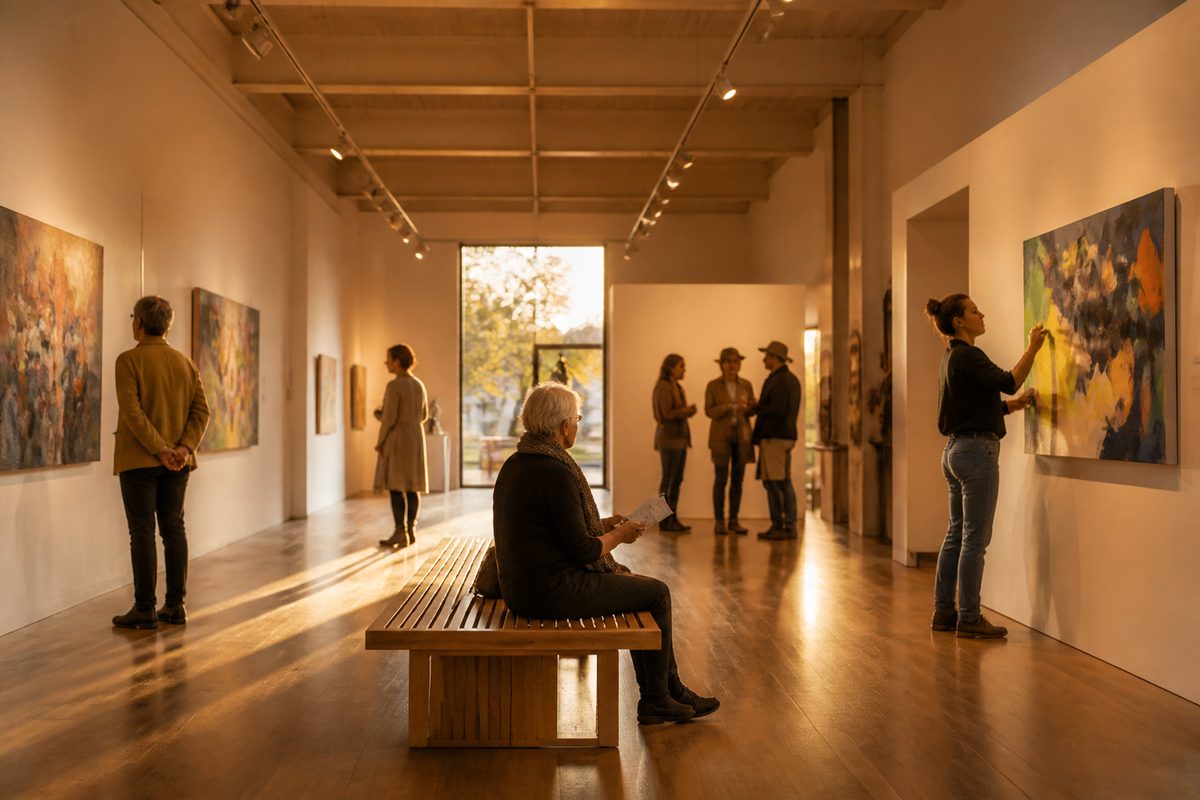
Regional art galleries matter to small Australian towns because they give local people a permanent, shared place to see, make and talk about culture without leaving home. That sounds modest. But a gallery in a town of a few thousand people does far more work than its floor space suggests.
It holds stories, supports working artists and gives visitors a reason to stay an extra night. It also tells young residents that creative lives are possible outside a capital city. This guide, from Sunraysia Arts Guide, looks at how that works in practice and why the value is often underestimated.
A fair caveat first: every town is different, and a gallery is not a cure-all. Its effects depend on how it's run, how closely it listens to its community and how well it's supported. The sections below describe the general ways galleries tend to help, not a promised result for any one place.
A Different Job From the Big-City Institutions
Ask most Australians to picture an art gallery and they think of the big state institutions. The Art Gallery of New South Wales in Sydney. The National Gallery of Victoria in Melbourne. These are important collections, and they do vital work.
But they serve a different purpose from a regional gallery. The two are best seen as partners, not rivals.
A capital-city institution is built to hold national and international collections, mount large touring exhibitions and draw huge crowds. A regional gallery is built around a place. Its walls are more likely to show the landscape people drive through each day, the history of the district and the work of artists who live down the road. Visitors can often chat with the person who made the piece, or with a volunteer who has known the collection for decades.
That closeness is the point. For someone in a small town, a trip to a state gallery may mean a long drive, a night away and a day off work. A local gallery removes those barriers.
Families can drop in after school. Retirees can visit weekly. A first-time visitor can feel fine asking what a piece means. Access, not prestige, is where regional galleries earn their keep.
Keeping Local Stories on Local Walls
Small towns are often defined in the national imagination by what they produce or what they lack. A gallery lets a community describe itself on its own terms. Paintings of a river, photographs of old main streets, textiles made by generations of local makers and new work about drought, flood or irrigation all become part of a visible record of a place.
This matters because a town's identity isn't only held in statistics. It lives in images, objects and shared memory. A local collection keeps those things in a form that can be shown to schoolchildren, newcomers and visitors alike.
Without a dedicated space, much of that material sits in private homes or sheds. It can be lost, or simply never seen.
Galleries also help residents see familiar surroundings in a new way. An artist's take on a paddock, a rail siding or a riverbank can change how someone views a place they thought they knew. That shift in attention is a quiet but real benefit to the whole town.
Space for First Nations Voices and Knowledge
Indigenous Australian art is among the most significant artistic traditions in the world, and regional galleries are often where it's met closest to Country. When a gallery works respectfully with local communities, it can show art that connects directly to the land the town sits on. It doesn't treat Aboriginal culture as a distant or generic subject.
The respectful approach matters. Good practice means talking with Aboriginal Australians from the relevant community. It means following cultural rules about what can be shown and by whom, and making sure artists are properly recognised and paid. A gallery that does this well becomes a place of listening as well as looking. It can support truth-telling and reconciliation in ways that feel personal and local.
It helps to look at how other countries handle similar questions. Debates about how First Nations in Canada are shown in public cultural institutions, for example, have pushed many galleries worldwide to rethink who tells the story and who holds authority over it. Australian regional galleries are part of the same conversation. Many are building their practice around community partnership, not top-down curation.
Supporting Artists Where They Live
Artists in regional areas often work without the dense networks of studios, dealers and critics found in the cities. A local gallery can fill part of that gap. It offers somewhere to show work, a deadline to aim for and an audience that's actually in the room. For emerging artists, a first show in a hometown gallery can be the confidence boost that keeps a practice alive.
Galleries also connect people. They bring together painters, potters, photographers, weavers and designers who might never otherwise meet. Workshops, openings and artist talks create informal professional circles.
Over time, those relationships can lead to joint projects, shared studios, markets and community events.
There's an economic side too. When a gallery commissions work, buys for its collection or hosts a show with sales, money flows to individual makers. Many regional artists mix creative work with teaching, farming, hospitality or other jobs. Even a modest income from exhibitions can decide whether they carry on or stop.
A Reason to Visit: Cultural Tourism
Travellers increasingly look for places with a distinct character. Cultural tourism means travel driven partly by art, heritage, food, music and local stories, and a good regional gallery is a natural anchor for it. Visitors who come for a wine region, a river holiday or a road trip often want something to do indoors, on a rainy day or late in the afternoon. A gallery fits. It also gives them something to talk about afterwards.
The benefit is rarely limited to ticket sales, and many regional galleries are free to enter. Instead, the gallery draws people into the town centre. There they may buy a coffee, eat lunch, browse a shop or book a night's stay.
A gallery near other attractions, cafes and public spaces can help shape a walkable cultural precinct, not just a single stop.
Quality of experience matters more than size. A small, well-curated show with clear labels and a warm welcome can leave a stronger mark than a large, impersonal one. Visitors remember being greeted, hearing a story and seeing something they wouldn't find elsewhere.
Understanding the Economic Case
Arguments for arts funding are sometimes waved off as sentimental. But there's a practical economic side. Economists use the idea of a fiscal multiplier to describe how a dollar of public spending can create extra activity as it moves through an economy. In general terms, money spent on a gallery pays wages, buys materials, commissions artists and supports local suppliers. Those people then spend some of it in the same community.
Be careful here. Multipliers vary widely depending on what's funded, how much of the spending stays local and the wider economic conditions. Nobody should assume a fixed return from any particular gallery.
What can be said with confidence is this. Cultural spending in a small town is more likely to circulate locally than money that leaves for large, distant suppliers, especially when it supports local staff, tradespeople and makers.
Galleries also belong to the wider creative industries, a broad group that includes design, film, publishing, performance, music and the visual arts. A healthy gallery tends to strengthen the creative scene around it. Graphic designers produce catalogues, photographers record openings, printers make posters and caterers serve events. A regional gallery can quietly seed a cluster of small creative businesses, helping a town hold on to skilled people who might otherwise leave.
Public Art and the Look of a Town
A gallery's influence often reaches past its own doors. Public art such as murals, sculptures, mosaics and installations can lift the look of streets, parks and riverfronts, and galleries often help plan, commission or explain it. Residents may meet art on the way to the supermarket without ever deciding to visit a gallery. That widens the audience a lot. site-specific art such as murals, sculptures, mosaics and installations
Public art also changes how a place feels. A blank wall, a tired underpass or an empty lot can become a point of pride when it's reworked with community input. Projects that invite local people, schools and Elders to contribute tend to build a sense of ownership. That can cut down on vandalism and encourage people to look after shared spaces.
Here, a gallery acts as an expert partner. It can advise on materials, safety, permissions and cultural sensitivities. It can also record the finished work so it becomes part of the town's story, not a one-off decoration.
Education, Wellbeing and Belonging
Schools in small towns often have limited access to cultural excursions. A local gallery can offer school visits, holiday programs, artist-led workshops and teacher resources. For many children, it's the first time they meet a working artist or see that creative careers are real. It also gives teachers a rich, hands-on setting for lessons in history, science, language and design.
Beyond school age, galleries support wellbeing in quieter ways. They offer calm, free or low-cost spaces where people can spend time with no pressure to buy or perform. Classes in drawing, printmaking or ceramics create regular social contact. That can mean a lot for older residents, newcomers and people at risk of isolation.
A gallery can also be neutral ground. In towns where the pub, the club and the church each draw particular groups, an exhibition opening may bring together people who rarely cross paths. That kind of shared experience builds the informal trust that holds small communities together.
How Funding and Support Work
Regional galleries rarely survive on ticket income alone. Most rely on a patchwork of local council support, grants, partnerships, volunteer labour and the odd sale. Knowing who backs them helps explain why continuity can be fragile.
At the national level, Creative Australia is the federal government's main arts investment and advisory body, and it supports artists and organisations across the country. At state level, agencies such as Create NSW back arts and culture activity in New South Wales, including regional programs, while other states have their own equivalents. Local councils are often the biggest and most steady supporters of regional galleries, frequently providing buildings, staff or operating funds.
Professional networks play a part too. Bodies such as the Regional Galleries Association and similar state-based groups help galleries share skills, swap touring exhibitions and push for lasting support. Peer links like these matter most for small teams, where one or two staff members may handle curating, marketing, accounts and education all at once.
Similar setups exist elsewhere. Whether a gallery is in New South Wales or in a region such as South Wales in the United Kingdom, small cultural venues commonly depend on a mix of public funding, community goodwill and partnerships. They face similar pressures around staying afloat.
Common Challenges Regional Galleries Face
Knowing the difficulties helps explain why these places deserve attention. Distance is one. Touring exhibitions can be costly to move and insure, and small budgets limit what a gallery can bring in. Staffing is another. Many galleries lean heavily on volunteers, which is great for community connection but hard to keep up over many years.
Facilities can be a problem too. Proper climate control, secure storage and good lighting cost money, yet they're essential for protecting collections. Older buildings, though charming, may lack accessibility features or climate control.
Finally, there's visibility. A gallery that does excellent work but isn't widely known risks being overlooked by locals and travellers alike. Clear signage, steady opening hours, a lively online presence and partnerships with tourism bodies can all help.
What Makes a Regional Gallery Thrive
There's no single formula. But a few qualities show up again and again in galleries that stay valued over time.
- Genuine local relevance. Exhibitions and programs reflect the people and places of the district, while still offering fresh ideas from beyond it.
- Community partnership. The gallery works with schools, Traditional Owners, local businesses, clubs and other cultural groups rather than going it alone.
- Welcoming atmosphere. Visitors feel they can walk in, ask questions and linger without feeling out of place.
- Reliable operation. Steady hours and clear communication build trust and habit.
- Diverse income sources. A mix of council, grant, partnership and earned income lowers the risk when any one source changes.
- Strong storytelling. Good labels, tours and online content help non-specialists connect with the work.
How Residents and Visitors Can Help
You don't need to be an art expert to support a regional gallery. Just visiting is the simplest and most valuable thing you can do, since attendance figures help galleries prove their worth to funders. Bringing a friend, a child or an out-of-town guest widens the circle further.
Beyond that, you can go to openings, join workshops, share exhibitions on social media and talk to local councillors about why cultural services matter. Buy work directly from artists when you can. Writing a short, specific review or leaving kind feedback is another easy way to help a small team see what's working.
Travelling? Build a gallery stop into your trip. A short visit can reveal a lot about a town's history, humour and priorities, often more than a quick drive-through ever could.
Looking Ahead
Small towns face real pressures, from population shifts to changing industries and climate uncertainty. In that context, galleries offer something lasting: a place where a community can think about who it is, where it's been and where it might go. They aren't luxuries tacked on after the essentials are covered. They're part of the social infrastructure that makes a town a place people want to live in and visit.
The biggest lesson from regional galleries around the country is that size doesn't measure significance. A modest room with a thoughtful hang, a committed team and an engaged community can shape a town's confidence and character for generations. For anyone curious about how art and place connect across the Sunraysia region and beyond, Sunraysia Arts Guide is a good place to keep exploring.