What Is a Juried Market?
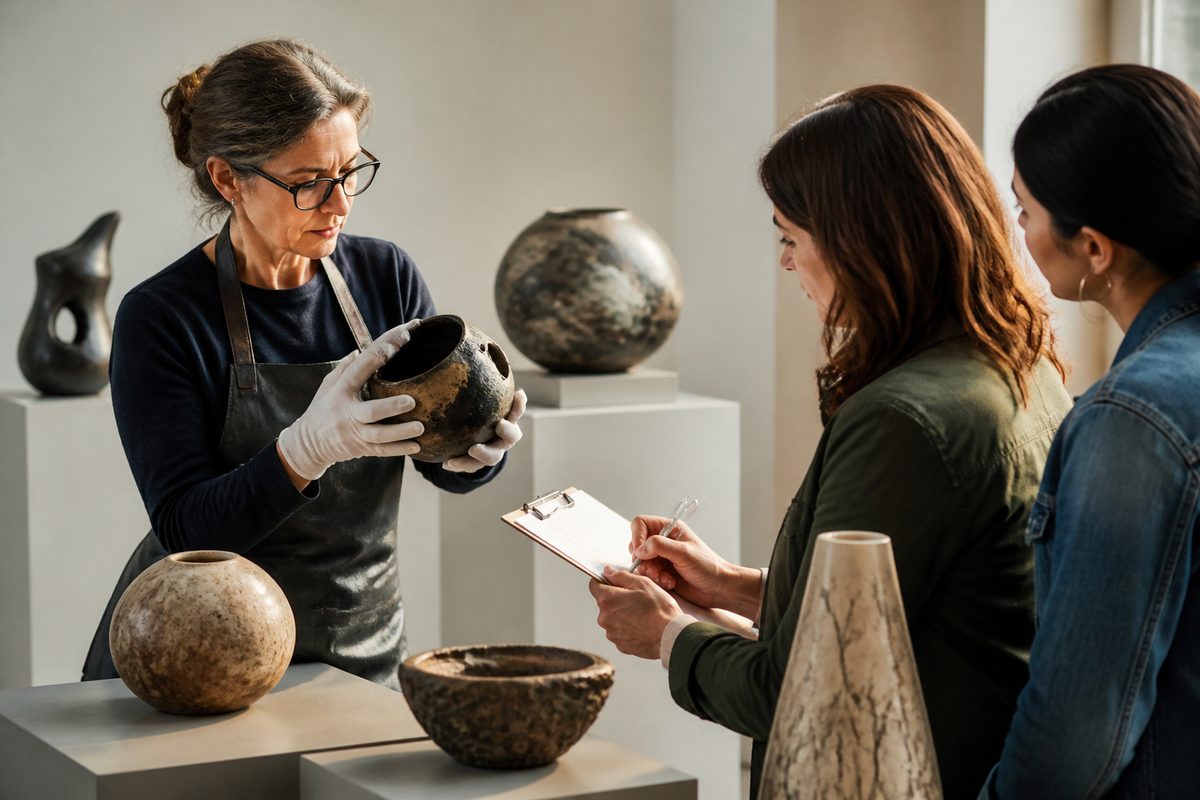
A juried market is a market where every vendor has to be approved by a panel before they can sell. Instead of letting anyone with a table and a fee grab a spot, organisers ask makers to apply. A small group then reviews their work against a set of published standards.
Only the applicants who pass are offered a stall. The result? A market with a more consistent, curated feel. The stallholders have been chosen, not just filled in.
The idea comes straight from the art world, where selection panels have long decided which work gets shown in exhibitions and fairs. A juried market borrows that approach and puts it in a shop-style setting. Ever wonder why one market is full of handmade goods while another mixes them with imported novelties and resold stock? The selection process is usually the reason.
This guide explains how a juried market works from both sides of the table. There's the maker applying for a stall. And there's the visitor deciding where to spend a Saturday morning.
The Core Idea Behind Selecting Stallholders
Every market has to decide who gets a stall. There are really only three ways to do it. The first is first come, first served: pay the stall fee, turn up, and trade.
The second is invitation, where organisers hand-pick people they already know. The third is a jury. Applicants send in examples of their work, and a panel decides.
A juried market sits in that third group. It trades some openness for quality control. Organisers are making a promise to shoppers that what they see has met a standard. They're also promising makers that the people trading beside them have met the same one.
That promise only means something if the process is applied the same way every time. So good juried markets publish their rules and criteria in advance.
It helps to separate the market from the process. The word “juried” describes how stallholders get in, not what they sell. A juried market can focus on modern fine art, traditional handmade goods, design-led products, or a mix of all of these.
How the Jury Works in Practice
The jury is the group of people who review applications. Its make-up changes from market to market. It often draws on people with real experience: working makers, curators, teachers, designers or seasoned market organisers.
Good juries are small enough to decide quickly. They're also varied enough that no single taste takes over.
The typical sequence looks like this:
- Applications open. The organiser announces a window and explains what kinds of work are eligible.
- The maker submits. Applicants send images of their work, a short description of how it is made, and sometimes a photo of their planned stall display.
- The jury reviews. Panel members score each submission against the criteria. Some markets use anonymous review, where the maker's name is hidden so the work stands on its own.
- Decisions are issued. Applicants hear whether they've been accepted, declined, or placed on a waiting list.
- Accepted makers confirm. They pay their stall costs and get details about setup, trading hours and rules.
This is narrower than a gallery selection. The question isn't only whether the work is good. It's whether the work suits a shop-style setting.
A jury may ask whether a maker can produce enough stock for a full trading day. Is their pricing realistic for a market crowd? Will their display hold up in the conditions of the venue?
What Jurors Look For
Criteria differ, but a few themes come up again and again. Knowing them helps explain why a juried market feels the way it does.
Originality and authorship
Most juried markets want to know the vendor actually made what they sell, or designed it themselves. Work that is bought in, resold, or built from commercial kits is commonly excluded. Some markets allow certain materials or techniques and not others, and the rules should say so.
Quality of making
Jurors look at finish, durability and attention to detail. Clean seams, well-joined materials, stable glazes and thoughtful packaging all show that the maker has built real skill. A lovely idea with poor execution is a common reason for a polite decline.
Cohesion
A strong application shows a body of work that hangs together. A stall of unrelated items in many styles can look unfocused. A clear point of view makes a maker memorable.
That doesn't mean every product must look the same. But there should be a thread you can spot.
Presentation
Photographs matter a lot, because they're often all the jury sees. Clear, well-lit, honest images of the actual work give reviewers confidence. Heavily staged or edited photos that don't match the real product can hurt an applicant.
Balance across the market
Even a very good application can be declined because the market already has several stalls offering similar goods. Organisers often aim for variety. So a decline doesn't always say anything about the quality of the work. It may simply mean the category was full that season.
The Kinds of Makers Who Trade at Juried Markets
The word artisan gets used loosely. In a juried setting it usually means someone who makes goods by hand, in small quantities, with developed skill. The broad categories are familiar:
- Visual art, such as prints, paintings, illustrations and photography
- Ceramics and pottery
- Jewellery and metalwork
- Textiles, weaving and fibre work
- Woodwork and furniture-scale objects
- Leather goods and bookbinding
- Handmade soaps, candles and similar small-batch products
The line between craft and art is blurry, and juried markets rarely try to police it. A hand-thrown bowl might count as craft. A sculptural ceramic piece by the same maker might be called art.
What the jury cares about is the skill, the originality and the honesty of the work. Not the label.
What It Costs a Maker
Money is a practical part of any market decision. A fee may apply at more than one stage, and it's worth understanding each one before you apply.
- An application fee. Some markets charge a small amount to cover the cost of running the jury. This is typically non-refundable, whether the application succeeds or not.
- A stall fee. Accepted vendors pay for their space, either per market day or for a season. This is usually the bigger cost.
- Additional costs. Makers may need to bring their own table, shade, signage and payment equipment, and some markets require public liability insurance.
A reasonable organiser is upfront about every charge before the maker applies. Be careful with any market that is vague about costs, or that charges a high application fee with no clear explanation of how the jury works.
Fees at legitimate markets exist to cover running costs. They aren't meant to make money from rejected applicants. Amounts differ widely, so check current figures with the organiser rather than relying on a general estimate.
How a Juried Market Differs From a Farmers' Market
Many people first meet the idea of a juried market by comparing it with something more familiar, such as a farmers' market. From a distance the two can look alike. Rows of stalls, a friendly buzz, people browsing with a coffee in hand. The difference lies in what is being selected and why.
A farmers' market is usually defined by what is sold: fresh produce and food made by or near the people selling it. Selection tends to focus on provenance, meaning where the goods come from and who grew or made them.
A juried market is defined by how stallholders are chosen. The criteria usually concern creative quality and originality, not growing location.
The two models can overlap. A farmers' market might run a small artisan section with its own approval step, and a juried arts market might include a few food makers. Where they do, the same principle applies: someone has set a standard and checked applicants against it.
Not sure which model a particular market follows? Look at its website or application page. Markets that use a jury almost always say so.
Juried, Open and Invited Markets Compared
The easiest way to see what a jury adds is to set it beside the alternatives.
Open markets
Anyone can apply, and stalls are usually given out on a first-come basis. These markets are open to beginners and offer a low-pressure way to test products with real customers. The trade-off is variability.
Quality, originality and product mix can swing widely from one week to the next, and resold goods are more likely to appear.
Invited markets
Organisers approach specific makers directly. This can give excellent results, but it leans heavily on the organiser's network. It can be hard for newcomers to break into, because there's often no public way to apply.
Juried markets
A juried market offers a public application and a clear standard. That makes it more open than an invitation and more consistent than an open market. For makers, acceptance can be a useful sign of quality. For shoppers, it offers some comfort that the goods are handmade and carefully produced.
None of these models is automatically better. An open market can be lively and welcoming, and a good place to start. The right choice depends on what a maker is trying to achieve and what a shopper hopes to find.
What Shoppers Gain
You don't need to be a maker to care about how a market picks its stallholders. For visitors, a jury changes the experience in a few ways.
- Greater confidence in what you are buying. When a market screens for handmade work, you're less likely to find mass-produced items passed off as local.
- Direct contact with the maker. Where makers are expected to have made their own goods, you can ask about materials, techniques and care instructions and get a real answer.
- A more distinctive range. Because organisers aim for variety, there are fewer duplicate stalls and more unusual finds.
- Prices that reflect the work. Handmade goods take time. A curated market can help shoppers see why a hand-finished piece costs more than something from a chain store.
A jury doesn't guarantee you'll love everything on offer. Taste is personal, and a panel's idea of quality is only one view. But as a rule, curated markets tend to feel more considered than unfiltered ones.
Limits and Criticisms Worth Knowing
It would be misleading to call the jury process flawless. There are fair criticisms, and a balanced picture includes them.
- Subjectivity. Even with published criteria, jurors bring their own preferences. Unconventional work can get overlooked.
- Barriers for newcomers. Early-career makers may not yet have a strong portfolio or professional photos, which can make applying harder.
- Cost and effort. Preparing an application takes time, and any application fee is a real cost for someone just starting out.
- Sameness. A panel that prefers one look can produce a market where many stalls look alike.
The best organisers know these risks. They may offer feedback on declined applications, open a pathway for emerging makers, or rotate jury members to keep the selection fresh.
If You Are Thinking of Applying
A little preparation goes a long way. Before you submit an application to any juried market, consider the following:
- Read the guidelines closely. Check what is eligible, how many images are needed and what the deadlines are.
- Photograph your work well. Natural light, a plain background and accurate colour are usually enough. Show scale and detail.
- Show a coherent range. Choose pieces that clearly belong together.
- Be honest about your process. Describe how the work is made and what you make yourself.
- Work out your numbers. Know your costs, your pricing and how much stock you can realistically make before you commit.
- Treat a decline as information. If the organiser offers feedback, use it. If not, apply again with a stronger submission or try a different market.
Finding Juried Markets in Your Region
Juried markets aren't limited to big cities. Regional areas often have a strong community of makers, and local organisers frequently run curated events alongside general markets. A good starting point is the websites and social media pages of local markets and arts groups, where application details are usually posted.
Regional arts coverage, such as that found on Sunraysia Arts Guide, can also give you a feel for the local creative scene and the kinds of events out there.
When you find a market that interests you, visit as a shopper first. Watch how the stalls are arranged. Talk to the vendors. See whether the work matches what you make or hope to buy.
Bottom Line
A juried market is a market where a panel reviews and approves each stallholder before they can trade. The jury looks at originality, quality, cohesion and how well a maker's work suits the market. Organisers may charge a fee to cover the process and the stall itself.
For makers, it can be a meaningful way to show work alongside peers held to the same standard. For shoppers, it usually means a more curated, handmade-focused experience than an open market.
It isn't the only valid way to run a market, and it has real limits. But once you understand how it works, it's much easier to choose the right market, whether you're applying for a stall or just out for a browse.