What Are the Five Main Types of Museums?
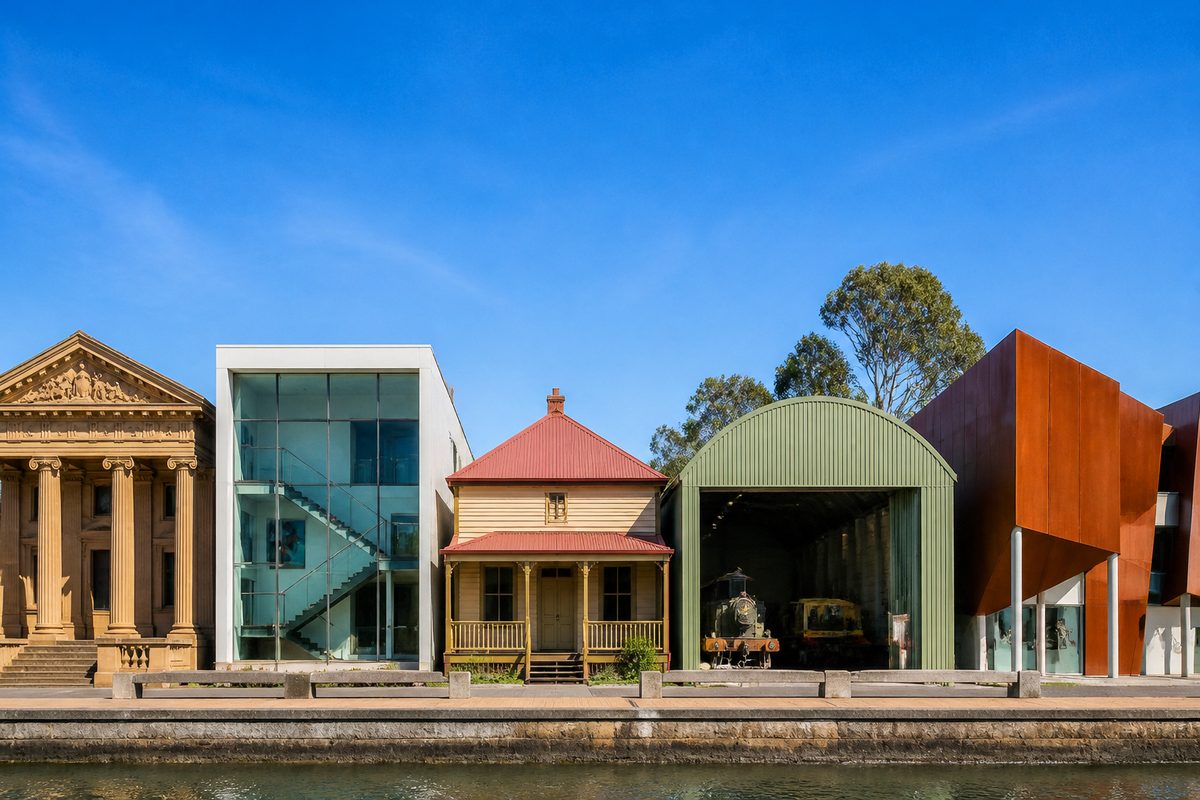
The five main types of museums are art museums, history museums, natural history museums, science and technology museums, and specialist or community museums. No single authority fixes this list in law, and many places straddle two or more categories. Still, it's the grouping people use most in classrooms, visitor guides and collection policies. Why? It follows what a museum cares for most: artworks, human stories, the living world, scientific ideas, or a narrow subject close to a community.
This guide takes a practical view. Instead of just defining each type, it shows how to spot one when you arrive, what to expect from its displays, and how to pick which to visit.
Planning a rainy afternoon? Helping a class choose a trip? The differences matter more than the labels.
Why Museums Are Sorted This Way
Museums are sorted by collection because the collection shapes everything else. The building, the staff, the way objects are lit and labelled, and the kind of question a visit makes you ask. The International Council of Museums describes a museum broadly, as a permanent, non-profit institution serving society that researches, collects, conserves, interprets and exhibits heritage.
The American Alliance of Museums is just as broad. Its members range from zoos and botanic gardens to historic houses and tiny local societies.
That breadth is why a tidy list of five is a teaching tool, not a rulebook. A museum might hold fossils and also run hands-on experiments. A historic house might show fine furniture and also tell the story of the servants who worked there. Treat the categories as lenses and they're useful. Treat them as walls, and you'll hit exceptions fast.
Type One: Art Museums
An art museum collects and shows works made mainly for their beauty, feeling or ideas. Paintings, sculpture, drawings, prints, photography and video all belong here. A visit asks how and why someone made something, and what it means to look at it now.
Many art museums are organised by period, region or movement. You can walk through centuries of change in a few rooms. The Metropolitan Museum of Art in New York is a well-known example of the large, encyclopaedic model, gathering work from many cultures and eras under one roof.
Smaller regional galleries do something quieter, and often more personal. They focus on local artists, regional landscapes or one medium.
Where Decorative Arts Fit
Not everything in an art museum hangs on a wall. Decorative arts, meaning ceramics, glass, textiles, furniture, metalwork and jewellery, sit in a grey zone between art and everyday use. A teapot can be a beautiful object. It can also record how people drank tea, what they could afford and which skills their makers had.
Decorative arts collections are often the best bridge between the art museum and the history museum. They show how loose these categories really are.
Contemporary Art Spaces
A contemporary art gallery sits at the living edge of the art museum family. A traditional collection looks back. A contemporary gallery usually shows work by living artists, often in temporary shows that change several times a year.
The work may be installation, performance, sound or digital art that challenges what you expect a museum object to be. Some of these venues hold no permanent collection at all, which is why they're often called galleries rather than museums. For a deeper look at that difference, see our explainer on whether a museum is an exhibition.
Type Two: History Museums
A history museum tells the story of people, places and events through the things they left behind. Its collections might include documents, clothing, tools, photographs, weapons, household goods and personal letters. Historians and curators call these things material culture: the physical proof of how people lived, worked, believed and organised themselves.
A history museum makes the past feel specific. A single worn tool or a hand-written ledger can say more about a trade or a household than a page of summary. Good ones also show whose story is being told and whose is missing. And they increasingly work with the communities whose histories they hold.
Living History and Historic Sites
Some history museums go beyond cases and labels. Living history sites recreate a period with costumed guides, working demonstrations, rebuilt buildings and objects you can handle. You might watch a craft done with period methods, or walk a restored street where staff explain daily routines.
Historic houses and heritage precincts belong to the same family. The building itself is the main object.
These sites rely on research, and the best are honest about what is known and what has been reasonably guessed. If a display claims certainty about a detail, it's fair to ask what evidence backs it up.
Cultural Heritage Beyond the Building
History museums also guard cultural heritage. That covers objects, but also traditions, languages, stories and skills passed between generations. Here museums connect most clearly with community identity. It's also where questions of ownership, repatriation (returning items to their original owners) and respectful display come up most often.
Type Three: Natural History Museums
Natural history museums study and show the natural world: rocks and minerals, fossils, plants, animals, insects and the ecosystems they form. Their collections are often huge. Only a small part is on public display, and the rest sits in research stores that scientists use for decades.
The Natural History Museum, London is a widely known example, famous for vast collections that span the study of life and Earth. Many cities and regions have their own version, often with a strong local focus on native species, rocks and landscape.
What sets natural history apart is its double role. It's a public gallery, but it's also a working research archive. A pinned insect or a pressed plant can help scientists track how a species has changed over time or where it once lived. Visitors tend to leave with a sense of scale, both of deep time and of how varied living things are.
Type Four: Science and Technology Museums
A science museum explains how the world works. Technology museums stretch that to how people have used knowledge to build, move, communicate and make things. The two are usually grouped together because the line between discovery and invention is thin. Typical subjects include physics, chemistry, astronomy, medicine, engineering, transport, computing and energy.
The big feature here is taking part. Science centres in particular love hands-on exhibits: pressing buttons, building circuits, testing structures, watching demonstrations. They're built less to keep rare originals than to help people grasp a principle by trying it.
Technology collections, on the other hand, often do keep historic machines, from early engines to old computers, so visitors can see how design changed.
Don't mix up the two ends of this type. A science centre may hold almost no historic objects. A technology museum may be mostly objects with few interactives. Both are fine, and knowing which you're heading to sets your expectations right.
Type Five: Specialist and Community Museums
The fifth type is the most varied. Specialist museums focus on a single subject, industry, person or theme, such as a railway, a maritime trade, a musical instrument, a war, a sport or a famous writer. Community museums, often run by local historical societies and volunteers, keep the story of one town or district.
Some lists name children's museums, university museums or military museums as separate categories. In practice, they fit comfortably here, because each is defined by audience or subject rather than by a broad field.
Their appeal is depth and closeness. A small museum devoted to one topic can offer detail that a large general museum would never have room to show. And local volunteers often add knowledge you won't find in any catalogue.
How the Five Types Compare
It helps to compare the types by what each is trying to do for the visitor:
- Art museums invite you to look closely and respond to creative expression.
- History museums ask you to understand how people lived and what changed over time.
- Natural history museums show you the variety and history of the natural world.
- Science and technology museums help you grasp how things work and how ideas become tools.
- Specialist and community museums take you deep into one subject or place.
Notice that the verbs differ: look, understand, observe, experiment, explore. That's a handy way to pick. Want to be moved? Try an art museum. Want to try things yourself? Head for a science centre.
Where the Categories Blur
Real museums rarely fit one box. A national museum may include art, history and science under one roof. A natural history museum may show Indigenous cultural material next to geology. An art museum may hold design objects that could just as easily be called technology. Curators are fine with this, and visitors should be too.
Still, sorting has a practical use. It tells you what a place is likely to do best, how it will collect, and what standards it applies to care and display. It also explains why two venues that both call themselves museums can feel so different once you walk in.
What Happens Behind the Scenes
Whatever the type, museums share a core set of jobs. They acquire and record objects, research them, explain them to the public, and look after them for the future. The last of these is the specialised field of conservation and restoration of cultural property. Trained conservators steady fragile items, control light, temperature and humidity, and decide how much work an object should get.
The aim is usually to slow decay and keep as much original material as possible, not to make an object look new. A painting, a fossil, a textile and a steam engine all need different care, which is one reason larger museums hire specialists in different materials. It's also why some objects are rotated off display, and why you may see low light around works on paper or textiles.
Professional bodies such as the American Alliance of Museums and the International Council of Museums publish standards and ethical guidance on this work. It covers care of collections, honest labelling and responsible acquisition. Many museums follow them voluntarily as a mark of good practice.
Choosing the Right Museum for Your Visit
A few simple questions will help you match a museum to your mood and group:
- What do you want to feel or learn? Curiosity about how things work points to science; curiosity about people points to history.
- Who is coming? Young children usually enjoy hands-on science centres and natural history displays with big specimens. Teenagers and adults may prefer the depth of an art or specialist museum.
- How much time do you have? A small community museum can hold you for an hour. A large encyclopaedic museum can take days.
- Do you prefer permanent displays or changing shows? A contemporary art gallery tends to offer the latter, which makes repeat visits worthwhile.
It also pays to check a museum's own website before you go. Opening hours, access, current exhibitions and booking rules change, and the museum is always the best source for them.
Reading a Museum Before You Enter
You can often guess the type from the name, but the clues go further. Look at how the venue describes its collection. Words such as collection, specimens, artefacts, works or interactive exhibits signal very different experiences.
Check whether it lists research programs, which suggests a working archive. Learning programs suggest a focus on visitor participation.
Inside, look at the labels. An art label often gives the maker, title, date and medium. A history label tends to give context and a story. A natural history label will usually carry a species name and a place of origin. A science label may ask a question or invite you to act. These small differences confirm what kind of museum you're in and help you read it on its own terms.
Museums and Local Arts Life
Larger cities have all five types close together. Regional communities often have only one or two, and these can carry real weight in local life. A small gallery, a heritage society and a community arts space may each fill a different role while sharing visitors and ideas.
Guides such as Sunraysia Arts Guide exist to help readers find and compare cultural venues in their own region. The same sorting approach used here works just as well in a country town as in a national capital.
Bringing It Together
The five main types of museums, art, history, natural history, science and technology, and specialist or community, are best seen as a map, not a rulebook. Each answers a different kind of curiosity, uses different ways to show and care for its collection, and offers a different way to connect with the world. Once you know which kind you're visiting, you can arrive with better questions and leave with more.
Next time you plan an outing, try a type you don't usually visit. A science centre for an art lover, or an art museum for a technology fan, is often where the best surprises wait.