What Are the Different Types of Art Shows?
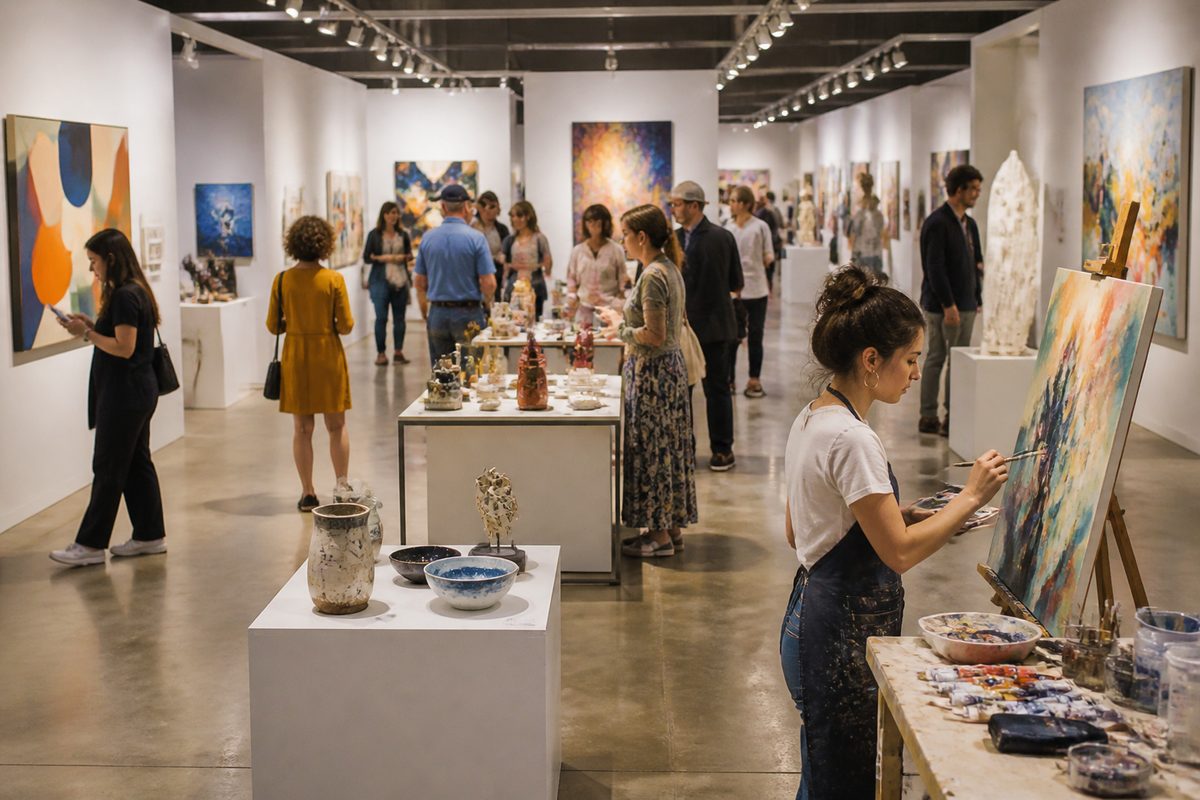
The main types of art shows are gallery exhibitions (solo, group and survey), juried or open-entry shows, art fairs, biennials, site-specific installations, open studios and outdoor festivals or markets. They all put artwork in front of an audience. But they differ in who picks the work, whether it's for sale, how long it runs and what a visitor is expected to do.
Knowing the differences helps you pick a show that suits you. Maybe you're a curious visitor, a collector or an emerging maker thinking about where to show your own work.
This guide sorts art shows by their format and purpose, so you can recognise what you're walking into. For a broader look at subject matter, see the separate guides on art genres and on art festivals. Here the focus is the structure of the show itself.
Why One Label Covers So Many Formats
People use "art show" loosely. It might mean a quiet room of framed pictures in a community hall, a major museum survey, a trade-style fair with dozens of dealers, or a weekend street event with stalls. What changes from one to the next is the organiser, the selection process and the goal.
Three questions separate most formats:
- Who decides what is shown? A single artist, a curator, a jury, or whoever pays for a booth.
- Is the work for sale? Some shows are mainly about ideas and public viewing. Others are commercial from the first minute.
- How long does it last? A one-night opening, a few weeks in a gallery, a three-day fair or a recurring event held every couple of years.
Keep those questions in mind as you read through the types below.
Gallery and Museum Exhibitions
The most familiar kind of art show is the gallery or museum exhibition. It's usually planned months or years ahead and runs for several weeks or longer. It's built as one visit with a beginning, a middle and an end.
Wall texts, labels and sometimes a catalogue help visitors make sense of what they see.
Solo shows
A solo show presents the work of one artist. It might focus on a recent body of work, or follow a theme or technique across a career. Solo shows let you see how an artist thinks over time and how individual pieces talk to each other.
They're common in commercial galleries, where the show may also be the artist's main chance to sell new work.
Group shows
A group show brings together several artists, often around a shared theme, place, material or moment. The appeal is range. You can compare approaches side by side.
A group show built around the region where you live can be an easy way to meet local practice, because the link between the works is clear straight away.
Survey and retrospective shows
A survey covers a period, movement or practice. A retrospective looks back across one artist's career. These are more typical of museums and larger public galleries, since they depend on borrowing works and on research.
They're often the best choice if you want context, not just a pleasant afternoon of looking.
Curated Thematic Shows
Any exhibition has someone deciding what goes on the wall. But a curated thematic show makes that decision the point. The curator develops an idea, picks works that test or show it, and arranges them so the visitor moves through an argument.
Good curating changes how you see single pieces. A painting that looks ordinary alone can read very differently beside a sculpture that answers it.
In practice, curators also handle the unglamorous side: loans, installation, lighting, wall text and the order in which rooms unfold. If you want to understand why a show feels the way it does, look at the pathway and the pairings, not only at each work.
Juried and Open-Entry Shows
Many community and regional shows invite artists to submit work, which one or more judges then assess. A juried show picks entries against criteria set by the organiser, such as quality, theme or medium. An open-entry show accepts most submissions, so it tends to be broader and more varied.
These shows often include prizes, which the judges can award or the public can vote on. For an emerging artist they're a common first step. They offer public exposure without the need for gallery representation.
For a visitor, they're a quick way to take the pulse of what people in a region are making, from traditional landscape painting to experimental pieces.
Quality can vary widely, and that's part of the charm. You may see a student's first serious canvas next to a seasoned artist's work.
Art Fairs
An art fair is different in kind from an exhibition. Instead of one organiser presenting one idea, a fair gathers many galleries or dealers, each renting space to show and sell work. Think of it as a marketplace with a cultural face.
The goal is commercial: introduce collectors to artists and galleries, and close sales.
Fairs range from highly prestigious to approachable:
- Art Basel is among the best-known international fairs, linked with leading galleries and major collectors. It's largely a professional and collector event, although the public can attend.
- The Affordable Art Fair series takes a different approach, aiming to make buying original work easier by focusing on pieces at lower price points. It suits first-time buyers who want to start a collection without a large budget.
When you visit a fair, expect a quick pace and many voices at once. There's rarely a single story to follow. You browse booth by booth, comparing styles and prices.
Gallery staff are usually happy to talk about an artist. Just remember they're there to sell, too.
Biennials and Large Recurring Shows
A biennial is a large exhibition held every two years, often across several venues in a city. A triennial runs every three. These events are usually organised around a theme set by a lead curator, and they show new commissions alongside existing work.
They can be ambitious and sometimes challenging. They often reach into public spaces, not just galleries.
What sets them apart from an ordinary exhibition is scale and rhythm. They become a reason to travel, a moment when a city's cultural life gathers around art. If you enjoy discovery and don't mind work that asks questions instead of offering easy answers, they can be rewarding.
Site-Specific and Installation Shows
Some shows are defined less by where they are than by what the work is. Installation art turns a space into the artwork itself. Rather than hanging objects on walls, an artist might fill a room with light, sound, found objects or built environments that you walk through. The experience is physical. Photographs rarely capture it.
Site-specific shows go a step further, making work for a particular place such as a warehouse, a garden, a heritage building or a stretch of riverbank. The setting is part of the meaning. The work may not make sense, or may not exist, anywhere else.
These shows are often temporary, so timing matters.
A related format is the sculpture trail or walk. Here, sculpture is placed outdoors across a park or town, and visitors follow a route. Weather, light and landscape all shape how the pieces are seen, which is part of the pleasure.
Open Studios and Artist-Run Spaces
In an open studio event, artists open their working spaces to the public, usually over a weekend or a short season. You see where work is made, along with tools, sketches and unfinished pieces.
Conversation is the main draw. You can ask an artist how a piece came together, and often buy directly.
Artist-run spaces are small, independent venues run by artists themselves. They tend to be experimental and low on polish. They're often where new ideas appear before reaching larger institutions.
Open studios and artist-run shows give you a closer view of the human side of making art than a formal gallery usually does.
Outdoor Fairs, Markets and Festivals
Outdoor art shows, often called art fairs in the casual sense, are stalls and displays set up in a public place for a day or weekend. Many are open to artists and makers who apply for a spot. Festivals go wider again, mixing visual art with music, performance, food and workshops.
They suit families and casual visitors, and prices are often friendly.
These events overlap with the formats above, but they feel different. There's less ceremony and more wandering. If you're after local flavour or a relaxed outing, they're a good starting point. To keep up with what's on in the region, Sunraysia Arts Guide is one independent place to look.
Shows Organised Around a Medium
Some art shows are defined by what the work is made from. A painting exhibition might gather oils, acrylics and watercolours. A sculpture show might include stone, metal, clay and wood. Printmaking, photography, textiles and ceramics have their own dedicated events too.
Mixed media shows celebrate work that combines materials, such as paint with collage, fabric with found objects, or print with stitching. These tend to be more varied than single-medium shows.
They can reward close looking, since you're often trying to work out how a piece was built.
Medium-based shows help when you already know what you enjoy. If you love ceramics, for instance, a dedicated show lets you compare many makers quickly and talk to people who share your enthusiasm.
How the Types Compare
- Gallery solo show: deep look at one artist; often for sale; runs weeks.
- Group show: variety and comparison; may be curated around a theme.
- Juried or open-entry show: broad local snapshot; often has prizes.
- Art fair: many galleries; commercial; short and busy.
- Biennial: large, themed and recurring; ambitious.
- Installation or site-specific show: immersive; often temporary.
- Open studio: behind-the-scenes; direct contact with the artist.
- Outdoor festival or market: casual, social and affordable.
Choosing the Right Show for You
If you want to learn, choose a curated exhibition or a survey, where wall text and structure help you follow the story. If you want to buy, an art fair, a gallery solo show or an open studio gives you the clearest path to a purchase. Affordable fairs lower the barrier.
If you want to meet people, open studios and festivals are the friendliest. If you want to be surprised, try an installation or a biennial.
For artists planning to show their own work, the same logic applies in reverse. A juried or open-entry show is a gentler first step than a solo gallery show. Open studios let you build relationships with buyers directly.
Fairs and biennials usually come later, once you have a body of work and some track record.
A few practical habits help at any type of show. Check opening hours and whether tickets are needed. Read the introduction or wall text before you start. Take your time with a few pieces rather than rushing past everything, and ask questions when staff or artists are around.
Bottom Line
Art shows aren't all the same thing. Some are built to tell a story, some to sell, some to find new talent and some simply to bring people together around creative work.
Once you can tell a curated exhibition from an art fair, or an open studio from a biennial, you can choose the experience that fits your purpose and get far more from it.
An art exhibition is the broadest category of art show, and understanding the different types helps visitors and artists choose the right setting. Solo shows focus on one artist, while group shows bring several together around a shared theme, and juried shows select work through a panel of judges. Gallery openings and museum retrospectives suit established or historical work, whereas art fairs, open studios and pop-up events offer more casual, sales-oriented ways to see and buy art.