What Are Some Small Australian Publishers?
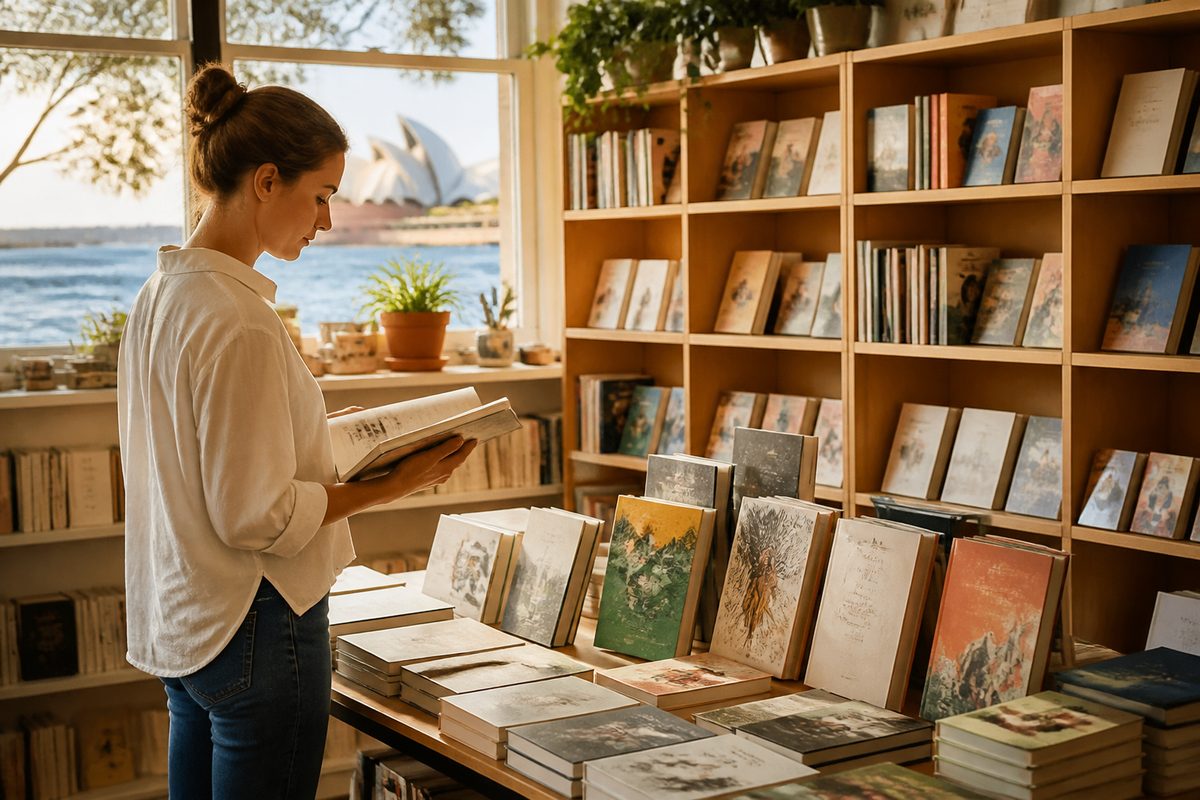
Small Australian publishers include Magabala Books, Affirm Press, Text Publishing, University of New South Wales Press and Aboriginal Studies Press, alongside many smaller presses that work from a handful of staff. But "small" is a slippery word. Some of these houses are tiny. Others are independent yet big enough to compete with the multinationals.
This guide shows you how to tell the difference. It names well-known houses worth knowing and explains how to keep finding new ones, whether you're a reader, a writer or a regular at your local bookshop.
Where a publisher's size, ownership or catalogue has changed over time, check its own website for the current position. Ownership in publishing shifts, and this article stays general rather than guess.
What "Small" Actually Means in Australian Publishing
A few multinational groups dominate Australia's book trade. Penguin Random House and similar global companies run large Australian arms with big marketing budgets and wide distribution. Everything else tends to get called independent or small. Those two words don't mean the same thing.
- Independent means the company isn't owned by a multinational group. It says nothing about headcount or turnover.
- Small press usually means a publisher with a modest staff, a short yearly list and a clear editorial identity. A small press often publishes a few titles a year, sometimes fewer.
- Mid-sized independent describes the in-between houses. They publish dozens of titles, employ specialist teams and still make decisions locally.
When someone asks for "small publishers", they usually mean any of these. So it helps to know which kind you're looking at.
A small press can take a risk on a debut poet or a regional story that a large commercial list might pass over. A bigger independent can offer wider bookshop reach.
Independent Houses Worth Knowing
Several names come up again and again when readers and booksellers talk about independent Australian publishing. Each has its own character.
Allen & Unwin
Allen & Unwin is often named as one of the best-known Australian-owned independents. It publishes fiction, non-fiction, memoir, history and children's books. Its size makes it a bridge between the small-press world and the big commercial houses.
If you want to see how an independent can compete at volume, it's a useful example. Many people wouldn't call it small, though.
Text Publishing
Text Publishing, based in Melbourne, built its name on carefully chosen literary fiction and quality non-fiction. Its books have a distinctive, design-led look. It also runs a classics series that has brought older Australian and international titles to new readers.
Text is a good starting point if you like novels that care about language.
Affirm Press
Affirm Press is a Melbourne-based independent that publishes memoir, narrative non-fiction, fiction and illustrated books. It has a name for backing new voices. It also puts real energy into publicity around its releases, which is often the hardest thing for a smaller house to do well.
Magabala Books
Magabala Books, based in Broome in Western Australia, is a leading Aboriginal and Torres Strait Islander publishing house. It publishes First Nations authors and illustrators across picture books, young adult titles, fiction, poetry and non-fiction.
Its list shows a publisher that exists to carry stories that might otherwise struggle to reach print. It's also a good source of children's literature that introduces young readers to Aboriginal and Torres Strait Islander cultures through the people who live them.
Aboriginal Studies Press and the Australian Institute of Aboriginal and Torres Strait Islander Studies
The Australian Institute of Aboriginal and Torres Strait Islander Studies (AIATSIS) is a national institution focused on Aboriginal and Torres Strait Islander cultures, histories and languages. Its publishing arm, Aboriginal Studies Press, produces scholarly and general-interest books in that field.
It shows that a small publisher can be an institutional press tied to a research body. It doesn't have to be a trade company chasing bestseller lists.
University of New South Wales Press
University of New South Wales Press (often written as NewSouth) is a good example of a press with academic roots that publishes for everyday readers. University-linked presses tend to lean towards history, science, politics, society and ideas. They often cover subjects that commercial houses see as too specialised.
The Different Kinds of Small Press
It helps to sort the field by purpose rather than size. Most small Australian publishers fall into a few broad groups.
- Literary and trade independents. General-interest publishers with an editorial identity, such as the fiction and memoir houses above.
- Community and cultural publishers. Presses that exist to serve a particular community, language or cultural tradition, including First Nations publishing.
- University and institutional presses. Publishers attached to universities, museums, galleries or research bodies, usually working in non-fiction and scholarship.
- Poetry and short-run presses. Very small operations that publish poetry, experimental writing, zines or limited editions, often run by one or two people.
- Regional publishers. Presses that focus on local history, place-based writing and the stories of one part of the country.
Knowing the group tells you what to expect. A university press will usually be rigorous and well referenced.
A poetry press will probably be experimental, with modest print runs. A community publisher may put voice and authenticity ahead of commercial polish.
Why Small Publishers Matter to Readers
Small publishers are often where new writing first appears. A first novel, a collection of essays or a book of poems may be taken on by an independent long before a bigger house would look at the author. Many writers move between houses over time. Plenty of celebrated books began on a modest list.
They also keep the national conversation varied. A multinational list tends to follow what sells in big markets. Independent lists can follow what one editor believes is important, including regional voices, minority languages and subjects with a small but passionate audience.
Awards are one place where this shows up. The Miles Franklin Literary Award, for novels that present Australian life, and the Stella Prize, which celebrates Australian women and non-binary writers, have both put books from independent publishers in front of wide audiences.
Following the shortlists for prizes like these is a reliable way to find houses you haven't heard of. Check each award's own website for the current lists and eligibility rules.
How to Find Small Australian Publishers Yourself
The names above are a starting point, not a full directory. New presses start, merge and close. So the better skill is knowing where to look.
Visit an independent bookstore
An independent bookstore is probably the single best discovery tool. Booksellers know which small presses are doing interesting work. They'll often put those books on a front table or recommend them by name. Ask what's new from local or independent publishers and you'll usually leave with a list.
Read the imprint page on a book you already like
Turn to the copyright page of a book you enjoyed. The publisher's name is printed there, and most publishers list the rest of their catalogue online. If you liked one book, there's a decent chance you'll like the editor's other choices.
Use library and archive catalogues
The National Library of Australia collects Australian publications, and its catalogue lets you search by publisher. That's a handy way to see everything a small press has released over time, including older and out-of-print titles.
Your state or local library catalogue works the same way. Librarians are often happy to point you to local presses.
Follow funding and support bodies
Creative Australia, the Australian Government's arts funding and advisory body, supports writers and literature through grants and programs. Many small presses and the writers they publish rely on this kind of support. Its announcements and published resources can lead you to publishers doing interesting work. State arts agencies and writers' centres do something similar at a local level.
Go to festivals, launches and fairs
Writers' festivals and independent book fairs often give small publishers a stall or a panel. They're an easy place to meet the people behind a press, browse several lists in one afternoon and buy directly.
Regional arts communities, including those covered by guides such as Sunraysia Arts Guide, regularly list creative events that can include readings and book-related gatherings. Check local listings for current details.
Choosing a Small Publisher as a Reader
If you're looking for a place to start, match the publisher to what you already enjoy. Don't try to learn every name.
- If you love ambitious novels and essays, look at houses known for literary fiction and quality non-fiction, such as Text Publishing.
- If you want memoir, narrative non-fiction or new voices with energetic publicity, look at houses like Affirm Press.
- If you want stories told by First Nations authors and illustrators, including picture books for the family, begin with Magabala Books.
- If you prefer history, science and ideas written for general readers, look at university-linked presses such as University of New South Wales Press.
- If you're drawn to scholarship on Aboriginal and Torres Strait Islander cultures, explore Aboriginal Studies Press and its link to AIATSIS.
- If you want a broad independent list across many genres, Allen & Unwin is a natural place to browse.
Buying directly from a press or through an independent bookstore usually puts more of the sale back into the Australian book world. Prices and availability vary, so compare before you decide.
A Note for Writers Considering Small Publishers
Many authors ask this question because they want to submit a manuscript. A few practical points apply.
- Check whether the publisher is open to submissions. Many small presses accept manuscripts only in set windows or through agents. Some only publish authors they've commissioned. The submission guidelines on the publisher's website are the final word.
- Read the list first. A press that publishes literary poetry won't want a thriller. Spend an hour with the catalogue before you write a cover letter.
- Be wary of fees. A traditional publisher pays the author or covers the cost of production. If a company asks you to pay to be published, that's a different business model. Read the contract very carefully, preferably with advice from a writers' organisation.
- Expect smaller advances and smaller print runs. That's normal. In return, small presses can offer closer editorial attention and a bigger say in how your book looks.
Success looks different at this scale. A modest print run that finds the right readers can be a good result for a small press. Copies sold is only one measure of whether a book has done its job.
Common Misunderstandings
"Small means amateur." Not at all. Many small presses employ experienced editors, designers and publicists, and their books are made to a high standard.
"Independent means tiny." Some independents are big businesses. Independence is about ownership, not size.
"Only the big houses win prizes." Awards regularly recognise books from independents and small presses. That's one reason prize shortlists are worth reading.
"Small presses are hard to buy from." Most sell through bookshops, online retailers and their own websites. And an independent bookstore can order almost anything for you.
Building a Habit of Reading Small
You don't need to overhaul your reading life. A simple habit is enough. Each time you pick up a book, glance at the publisher's name. Over a few months you'll start to recognise houses whose taste matches yours, and you'll begin to trust them the way you might trust a favourite record label or gallery.
Ask a bookseller for one recommendation from an independent each time you visit. Borrow a title from your library by a publisher you haven't tried. Follow the shortlists of the Miles Franklin and the Stella Prize and note which presses appear.
None of this takes much effort. And it quickly widens your sense of what Australian publishing looks like.
Bottom Line
Small Australian publishing is a varied field. There are literary houses such as Text Publishing, energetic independents like Affirm Press, First Nations publishers such as Magabala Books, and institutional presses linked to AIATSIS and universities. Then come the countless micro-presses working in poetry and local history.
Allen & Unwin sits at the larger end of the independent spectrum. The multinational groups, including Penguin Random House, sit outside it.
The most useful approach is to treat these names as a starting map. Then follow your own interests through bookshops, libraries, prize lists and festivals. Every press you discover is another way into Australian writing you might not otherwise have met.
Small Australian publishers play an important role in the local book industry, and many of them sit alongside larger independent houses such as Allen & Unwin, which began as a modest operation before growing into one of the country's best-known independent publishers. Smaller presses tend to focus on narrower areas such as poetry, literary fiction, children's books, regional history or Indigenous writing, giving emerging and specialist authors a route to readers that bigger commercial publishers may overlook.