How Long Should a Blurb Be?
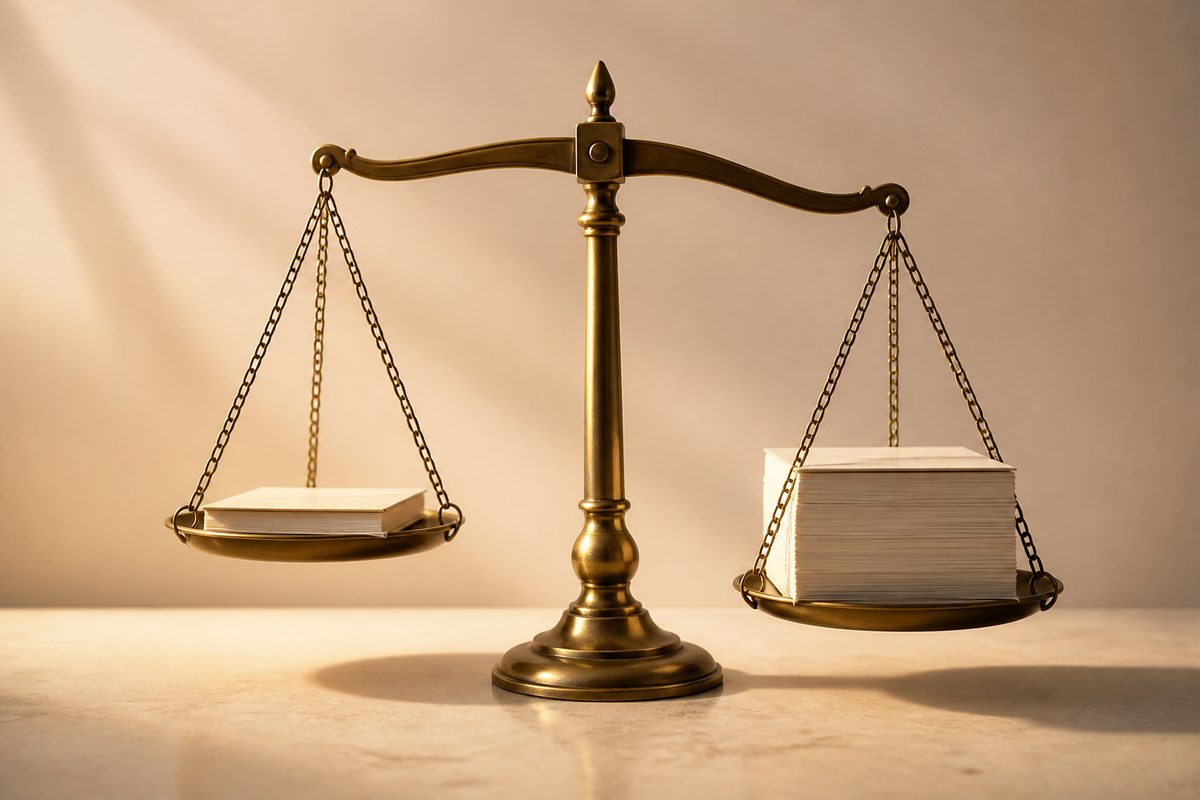
Most blurbs work best at roughly 100 to 200 words, with the strongest hook sitting in the first two or three lines. That range is a working habit, not a rule. The right length depends on where the blurb will appear, what kind of book it describes and how much a browsing reader will put up with before moving on. This guide is about that choice: how to pick a length for each spot, and how to tell when you've written too much or too little.
Still unsure what your blurb should say? Start with the job it does, then come back to the word count. Independent arts and writing resources such as Sunraysia Arts Guide often treat short writing as a craft of choosing what to leave out. A blurb is a good example. Sunraysia Arts Guide
What a Blurb Is Actually Doing
A blurb is not a summary. A summary tells the whole story, ending included. A blurb is sales and invitation copy. It gives a reader just enough to decide whether the book is for them. It sets up a situation, introduces a person or problem, hints at stakes and stops before the answers.
That's why length matters so much. Too short, and the reader has no reason to care. Too long, and you start answering questions the reader should still be asking, or you bury the hook under background detail.
The aim is the shortest version that still paints a clear picture and makes people want to read on.
It also helps to keep the blurb apart from related copy. A blurb is longer than a tagline, which is a single line that captures tone or premise. It's longer than an elevator pitch, the one or two sentences you'd say to a stranger in the time it takes a lift to rise a few floors. And it's shorter than a synopsis, which is written for agents, editors or competition judges and gives away the full plot.
Keep these four pieces distinct. Then you won't stuff the wrong material into the wrong space.
The 100 to 200 Word Working Range
For most full-length titles, a blurb of about 100 to 200 words is comfortable. Under about 100 words, you've usually got room for a hook, a feel for the central character and one line of stakes. Not much else. Over about 200 words, readers on a phone hit a wall of text, and the opening has to work harder to hold them.
Within that range, a few targets make sense:
- Around 100 words suits shorter works, quiet literary titles and books where a little mystery is part of the appeal.
- Around 150 words suits most commercial fiction and narrative non-fiction, where you need to set up a situation, a person and a threat or desire.
- Around 200 words is the top end for complex premises, series openers that need a little world-building, or practical non-fiction that must list what the reader will gain.
Treat these as starting points. The better question is always whether every sentence earns its place.
Matching Length to the Place It Appears
One blurb rarely does every job. The same book usually needs a longer version for an online listing and a shorter one for the printed back cover. The space differs, and so does the way people read.
The back cover
A printed back cover has to share space with a review quote, a barcode, a price, an author line and sometimes a short bio. That leaves a small block for the description. The text must also be big enough to read while standing in a shop.
So back cover blurbs often sit at the shorter end, perhaps 100 to 150 words. Break them into short paragraphs so the eye can move through quickly.
Online retailer pages
Online, the description box has more room, but readers don't always read all of it. Many retail pages show only the first few lines before a link to expand the rest. So the opening sentences carry the most weight, whatever the total word count.
If you publish through Kindle Direct Publishing, you enter your description in a dedicated field that supports basic formatting such as bold text and line breaks. Check the current limits and options in the dashboard rather than assuming, because platforms change their rules. Use formatting lightly. A short bold opening line and clean paragraph breaks usually read better than heavy styling.
Goodreads and reader communities
A Goodreads listing is a different setting again. Readers there are often comparing many titles, saving them to shelves and reading reviews next to the description. A blurb that's clear, specific and not padded with hype tends to sit well.
If you keep an author profile, make the description there match your retailer blurb in substance. Readers shouldn't meet two conflicting pictures of the same story.
Social posts, newsletters and catalogues
For a social post, a newsletter feature or a festival or library catalogue, you may only get 30 to 60 words. Don't just chop the long version at the limit. Write a short blurb built for the space, one that opens on the strongest hook and ends on a clear question or tension.
Some authors keep three versions on file: 50 words, 100 words and 200 words. Ready whenever a space turns up.
How Genre Shifts the Ideal Length
The genre of your work shapes what readers expect a blurb to do, and so how long it can run.
- Thrillers and crime reward tight, punchy blurbs. A clear threat, a ticking clock and a hint of betrayal are enough. Padding kills the pace the cover is promising.
- Romance often gets slightly more room to set up the two leads, the obstacle between them and the emotional tone. Still, stay on that central relationship rather than every subplot.
- Fantasy and science fiction have a particular trap: world-building. It's tempting to explain the magic system or the political map, but a reader needs a person and a problem first. Keep setting detail to the least that makes the stakes clear.
- Literary fiction can go shorter and more atmospheric, leaning on voice and one strong image rather than a plot rundown.
- Non-fiction and how-to titles usually need to state the problem, who the book is for and what the reader will be able to do afterwards. That can justify the upper end of the range, though bullet points keep it easy to scan.
- Children's and picture books need very short descriptions, often written with the adult buyer in mind as much as the child.
Not sure what's typical? Look at the descriptions of several recent titles in your genre near the top of the charts. Notice their length, how fast they name the central character and how they close.
You're not copying. You're learning what readers of that kind of story already expect.
What to Include in the Words You Have
Once you know your target length, spend the budget wisely. A dependable structure for story-driven titles looks like this:
- A hook line. One striking sentence or question that sets the tone. This can overlap with your tagline.
- The protagonist and their situation. Name the protagonist early, say who they are in a handful of words and show what they want or what has gone wrong.
- The complication. What stands in the way, or what changes everything.
- The stakes. What is lost if the protagonist fails. Make it specific.
- A closing pull. A line that leaves the outcome open without a hollow cliffhanger.
For non-fiction, swap the protagonist for the reader. Describe the reader's problem, what the book offers and why the author is a credible guide. Then close with the benefit.
Notice what's missing: subplots, secondary characters, backstory, the ending and long lists of names. Each adds words without adding pull. A good rule is to mention one named character, maybe two, and refer to everyone else by role, if at all.
Using the Elevator Pitch and Tagline to Set the Length
One practical way to build a blurb is to grow it from pieces you already have. Start with your elevator pitch, the one or two sentences that explain the premise. That becomes the spine of the first paragraph.
Add your tagline as an opening or closing line if it adds energy rather than repeating what's already said. Then build outward with the protagonist's situation and the stakes.
This method keeps you honest about length. If your elevator pitch can't be said clearly in two sentences, the blurb will probably ramble too. Fix the premise before you worry about word count.
Metadata and Discoverability
On retail platforms, the blurb is part of your metadata, the structured information that describes the book to stores, libraries and search tools. Along with the description, metadata includes the title, subtitle, categories, keywords and series details. Because both people and search systems read the description, it has a second job: discoverability.
That doesn't mean stuffing the blurb with keywords. A description that reads awkwardly will put off the human reader, and that's the person who decides to buy or borrow.
Instead, let the natural language of the blurb mention what a reader in your genre would search for, such as the setting, the type of story or the problem a non-fiction title solves. Where you can, place these in the first few lines, which are the ones most likely to show up in listings and search snippets.
Length plays a small part here. A very thin description gives search systems and readers little to work with. An overlong one may get cut off at an awkward point. The 100 to 200 word range sits between the two.
Testing Your Blurb Instead of Guessing
Authors often argue about the ideal word count when a simple test could answer it for their own title. A/B testing means comparing two versions of the same element to see which does better. For a blurb, that could mean running a shorter and a longer version one after the other on your retail page, or using two versions in separate newsletter sends, then watching which draws more clicks or sales.
A few cautions make the results more reliable:
- Change one thing at a time. If you alter the length, the hook and the formatting together, you won't know what made the difference.
- Give each version enough time and traffic. A handful of visitors tells you very little.
- Keep other factors steady, including the cover, the price and any promotion running in the same period.
- Record what you tried and when, so you can look back with a clear head.
Can't run a formal test? Informal ones still help. Read each version aloud and time it. A blurb that takes much longer than about a minute to read aloud is probably too long.
Show both to a few readers of your genre. Ask what they think the story is about and whether they'd keep reading. Their answers will show whether the blurb gives the right amount.
Signs Your Blurb Is Too Long or Too Short
Word count is a guide, but certain symptoms tell you more.
Too long:
- It names more than two or three characters.
- It reads like a plot summary and reveals twists or the ending.
- The first paragraph is mostly background rather than a person facing a problem.
- You find yourself adding adjectives and praise because the facts have run out.
Too short:
- It could describe a dozen other books in the same genre.
- There is no named or clearly described protagonist.
- The stakes are missing, so there's no reason to worry about what happens.
- It leans on a quote or a vague line such as \"a story you will never forget\" in place of content.
A Simple Trimming and Expanding Process
Is your draft over length? Cut in this order. First, remove backstory. Next, remove secondary characters and subplots. Then cut any sentence that repeats an idea you've already made. Finally, tighten phrases, swapping long constructions for short ones. After each pass, reread the opening lines to make sure the hook is still sharp.
Is it under length? Resist the urge to pad. Ask what a curious stranger would want to know. Who is the main character? What do they want? What's making it hard? What happens if they fail? Answer those in specific detail and the blurb will grow in a useful way.
Last, avoid the common trap of leaning on comparisons and big words to fill space. Descriptions such as \"gripping\", \"unputdownable\" and \"a must-read\" take up room and tell the reader nothing. A concrete detail about your protagonist or setting does far more work.
Bottom Line
Aim for about 100 to 200 words. Go shorter for back covers and social posts, and let genre and platform guide the final figure. Put the hook and the protagonist at the top, build from your elevator pitch, keep the metadata and discoverability role of the description in mind, and test versions where you can. The best length is the shortest one that makes a reader curious enough to open the book.